Corns on the Little Toe and Between Toes: An Orthopedic Foot Specialist Explains the Real Cause
An orthopedic foot specialist at Gangnam Standard Orthopedics explains the true causes of little-toe corns and between-toe blisters, and how corn removal surgery is performed under local anesthesia.

Corns on the Little Toe and Between Toes: An Orthopedic Foot Specialist Explains the Real Cause — Not a Dermatology Issue, but an Orthopedic One.
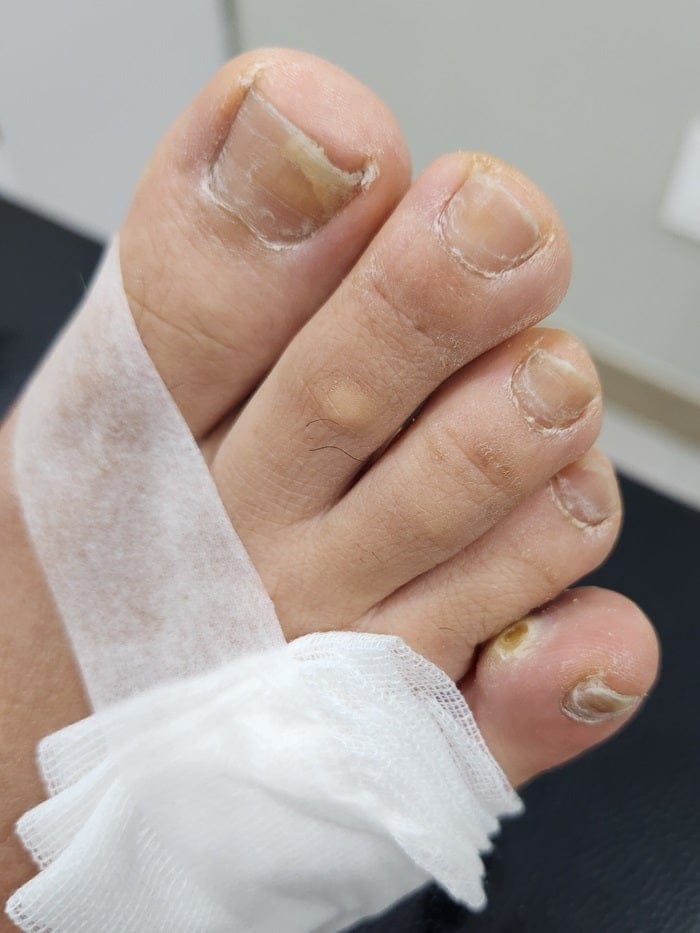
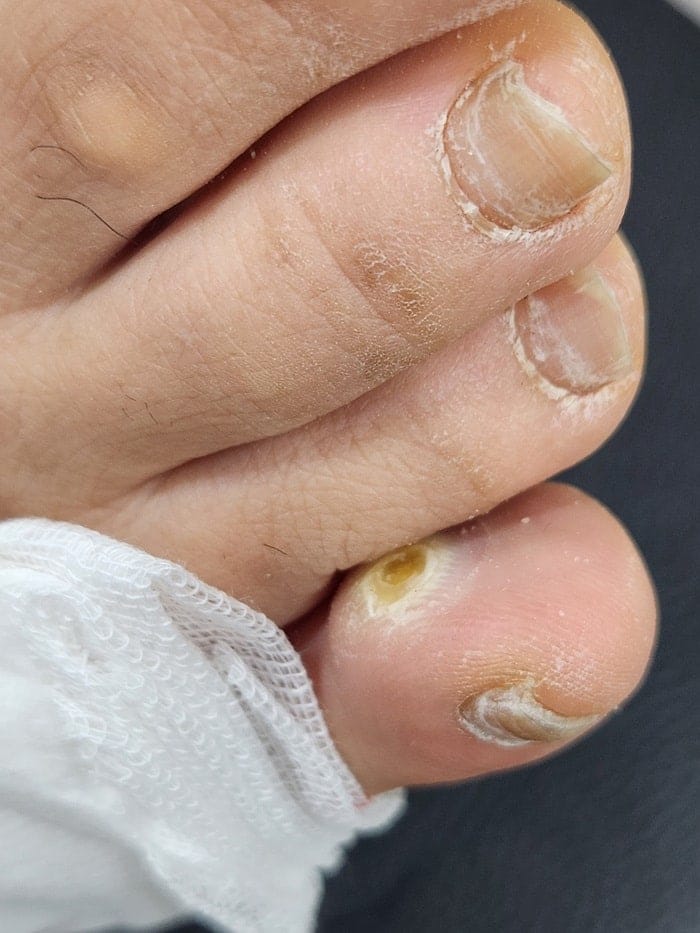
A patient who came in with a blister on the little toe and a corn between the little toes.
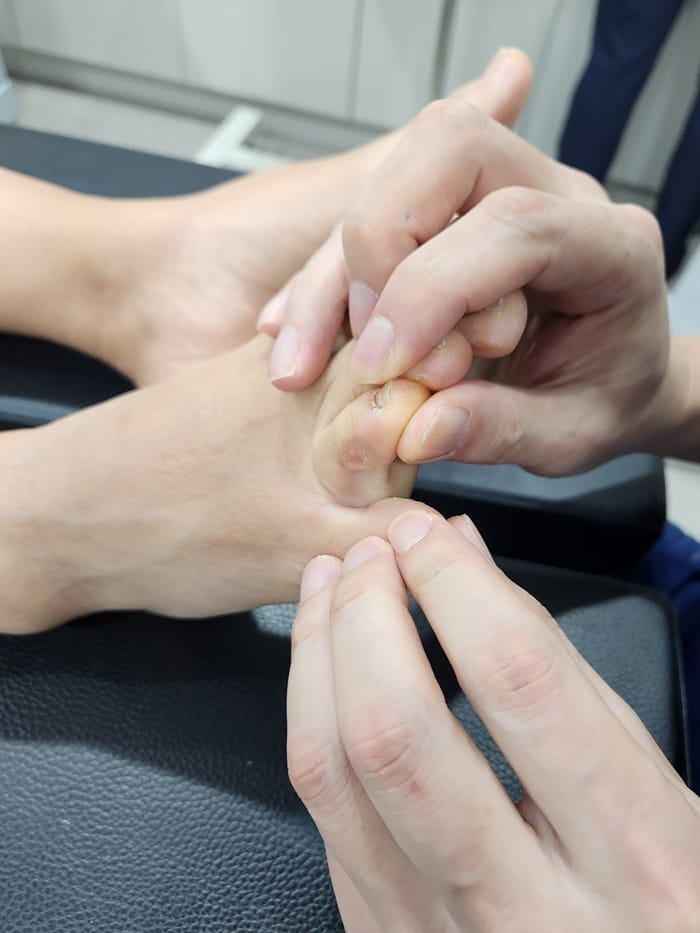
This patient generally had a high pain tolerance and tended to endure discomfort without seeking care.
Despite having a long-standing blister and corn between the toes, the patient had been managing daily life without major difficulty — until the family dog accidentally stepped on the little toe.
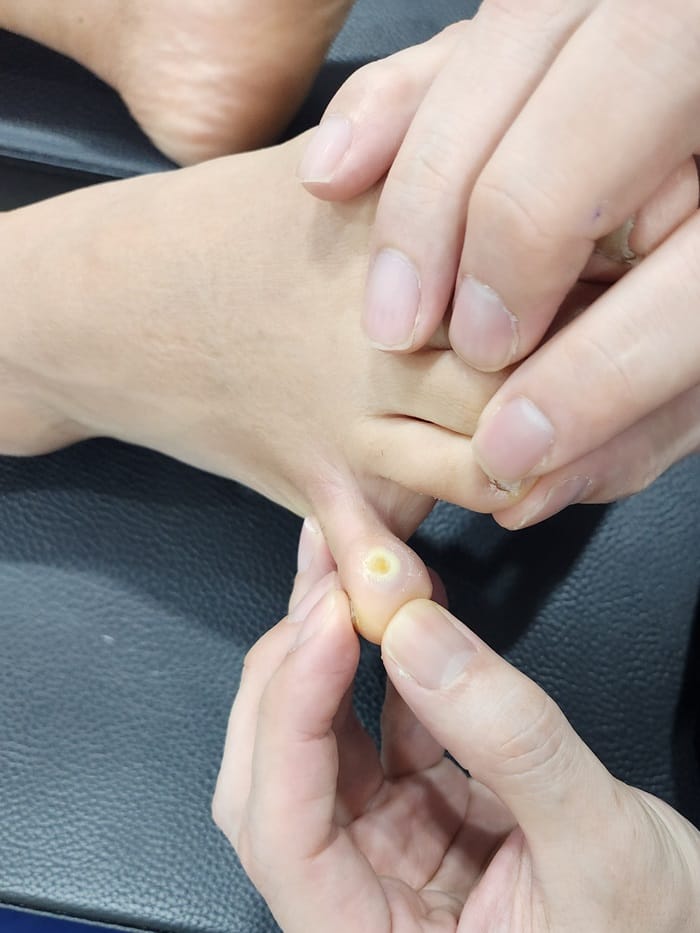
The patient let out a sharp cry as intense pain suddenly surged. It was so severe that it was no longer bearable, and that is what finally brought the patient to our clinic.
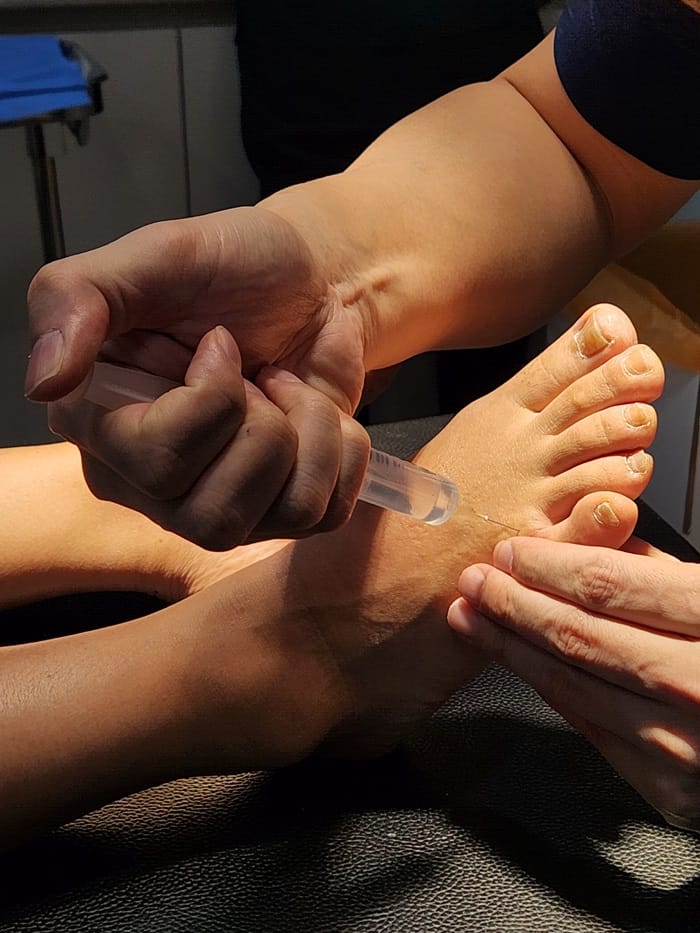
The patient had corns on both the fourth toe and the little toe, but it was the little-toe corn that was causing the most pain. After coming in, the patient decided to go ahead and have the corn removal surgery performed at the same visit.
Cases of toe corns and between-toe corns.
Among the many toe corn cases we see, the most common combination is a corn on the inner side of the little toe paired with a corn on the outer side of the fourth toe.
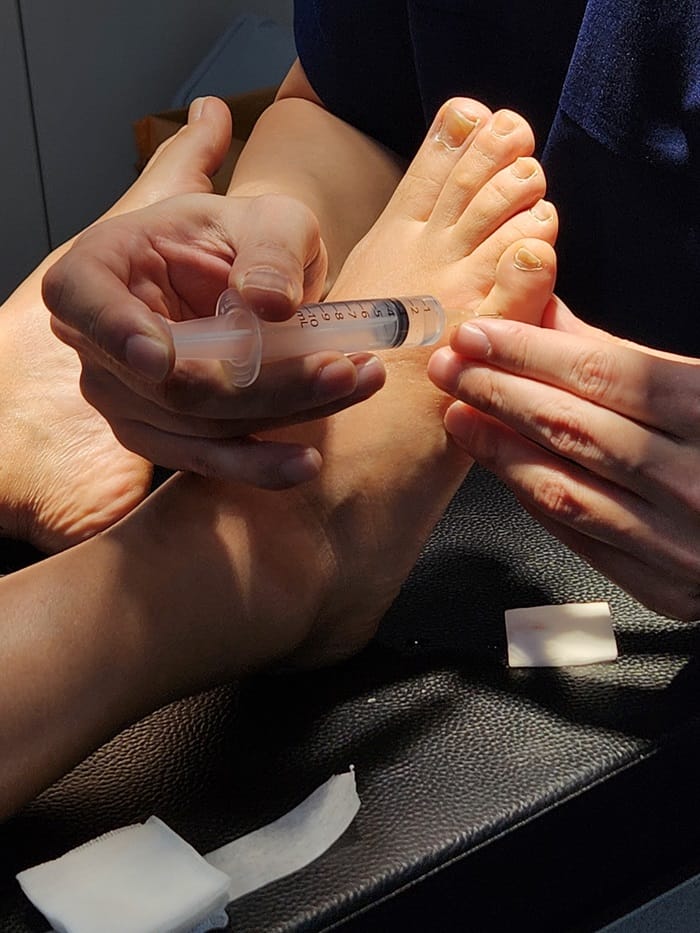
To remove the corn on the inner side of the little toe, Gangnam Standard Orthopedics — a clinic specializing in toe corn treatment — performs the procedure under local anesthesia administered by Dr. Jo Ju-won, our chief orthopedic foot specialist.
While other clinics typically administer anesthesia directly around the painful area, our clinic applies local anesthesia at the point farthest from the affected site, using the finest available needle.
As a result, patients who have experienced trauma from anesthesia in the past, or who have been afraid of surgery because of painful injections, are able to undergo the procedure without pain from the anesthetic injection.
The reason our clinic uses local anesthesia rather than general (sedation) anesthesia for toe corn removal surgery is that it eliminates the need for postoperative hospitalization, saving time both before and after surgery.
This also reduces costs. Because corn removal is treated as a medical condition rather than a cosmetic procedure, it is eligible for coverage under national health insurance as well as personal supplemental insurance (silbi).
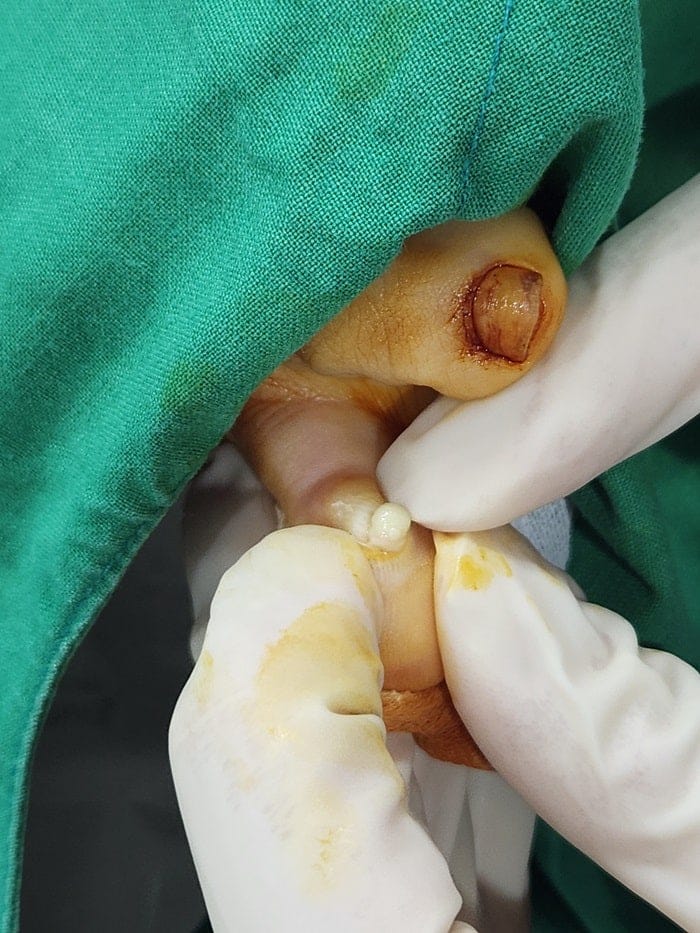
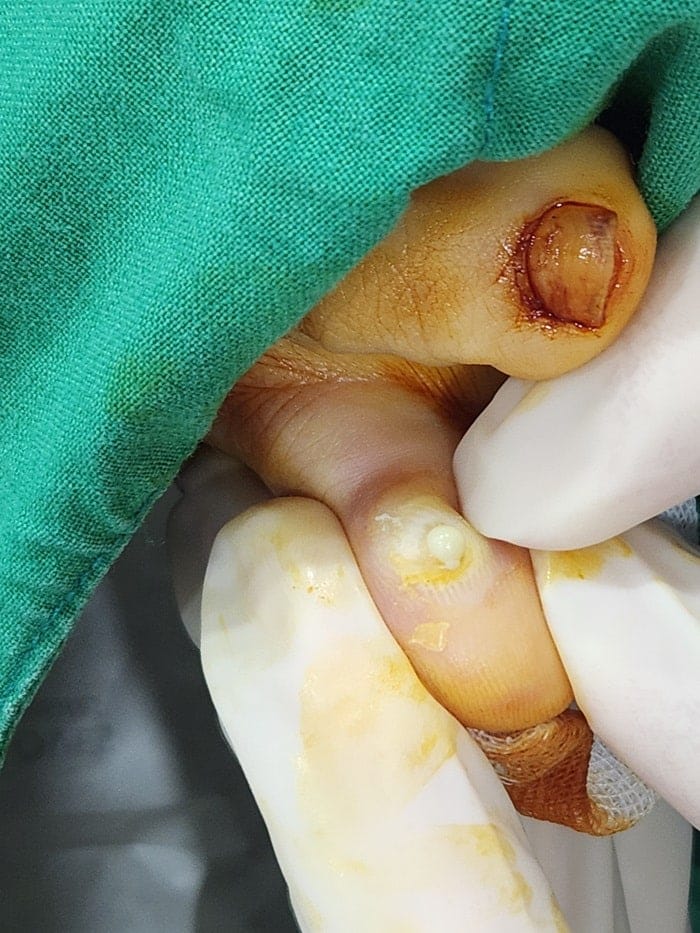
The long-standing corn on the little toe had developed pus and inflammation. From the very start of surgery, pus began to discharge immediately.
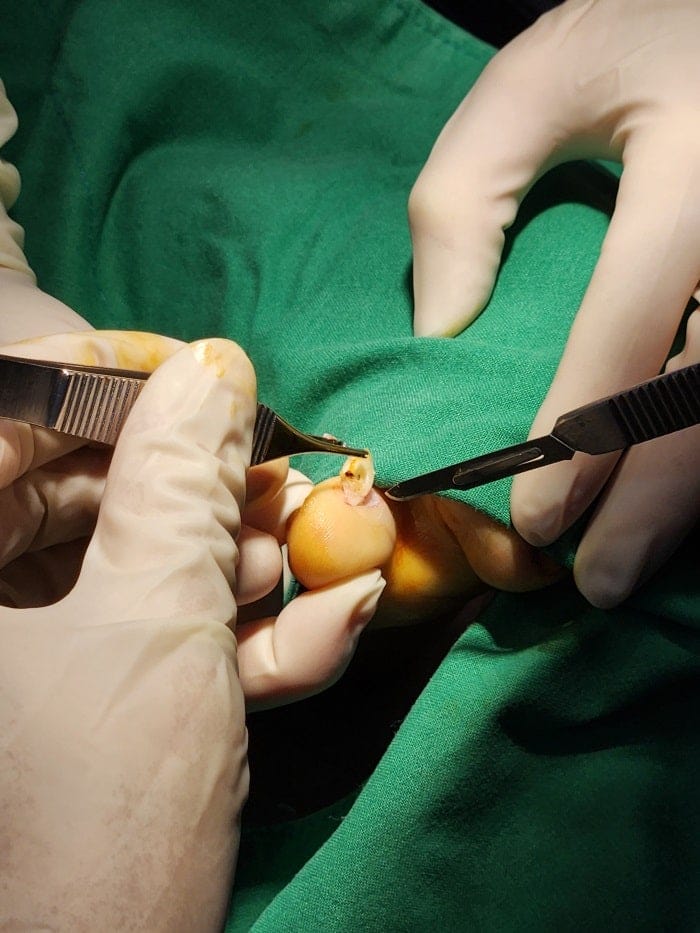
Given the pus and inflammation present in the little-toe corn, it is easy to understand why the pain was so severe when the dog stepped on it.
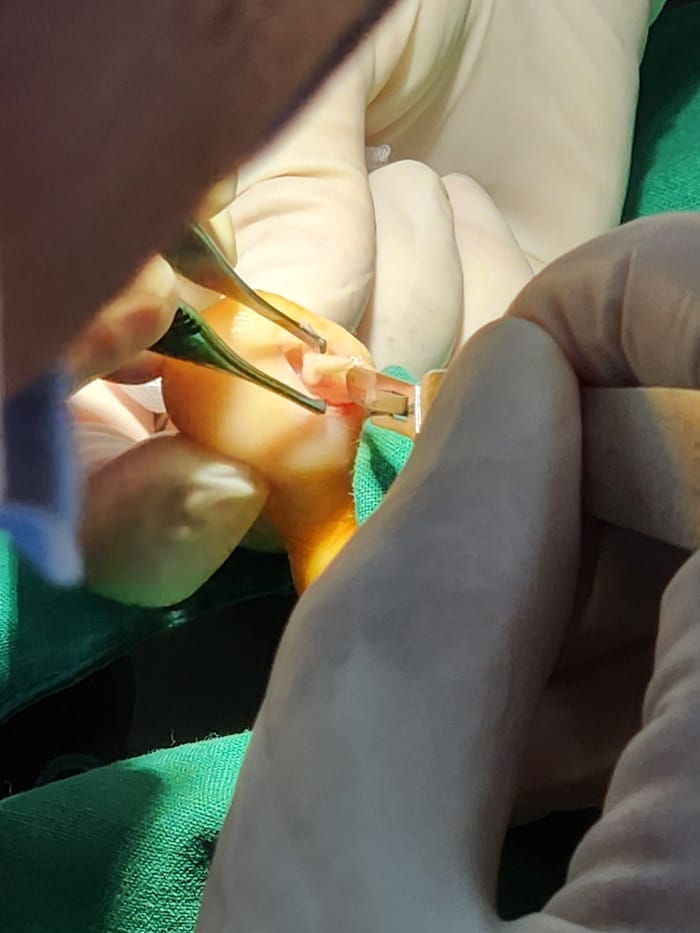
Perhaps we should thank the dog — it may have been the reason the patient finally made it to the clinic.
The corn had hardened considerably over time, causing ongoing friction and irritation to the surrounding skin of the toe. This shows the process of removing the little-toe corn.
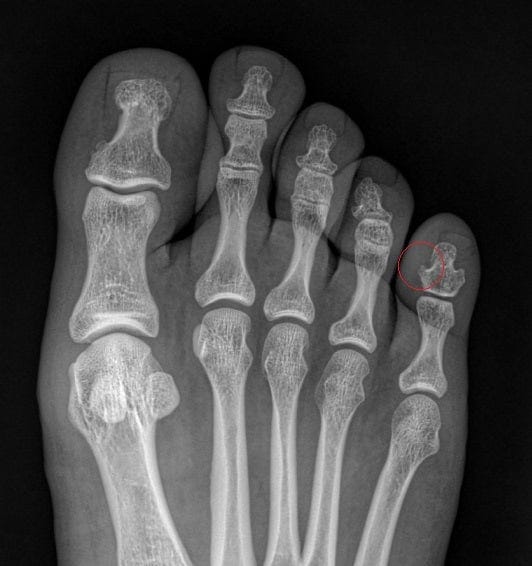
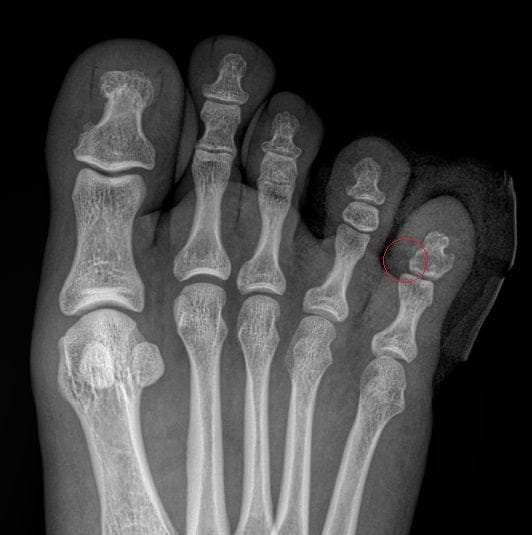
The before-and-after appearance of the bone spur on the toe — which was the underlying cause of the little-toe corn — can be confirmed in the pre- and post-operative X-ray images.
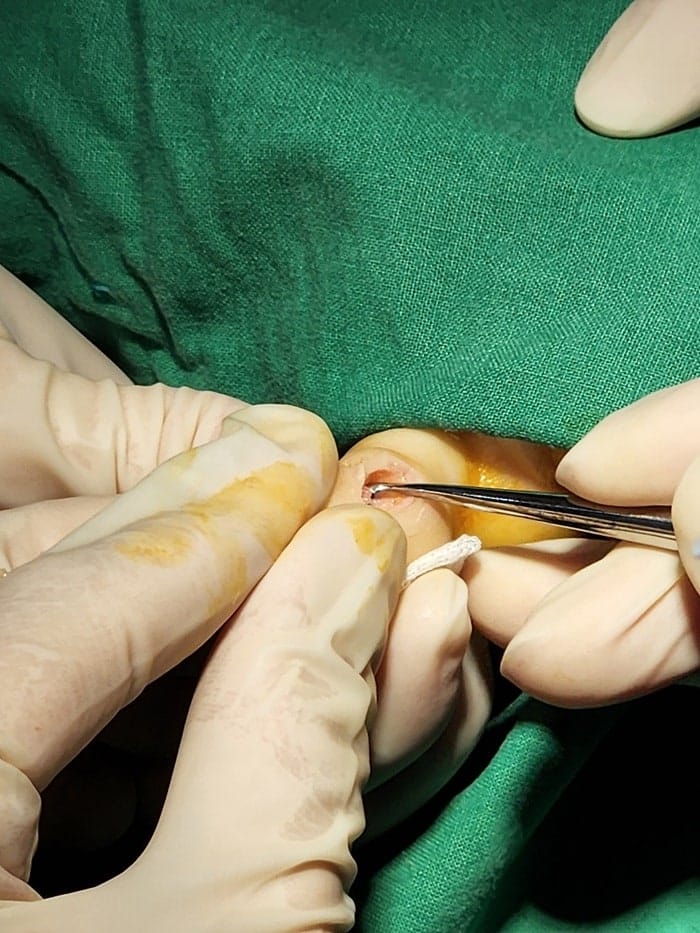
After removing the bone spur that had caused the little-toe corn, Dr. Jo Ju-won performed a curettage procedure unique to his surgical technique in order to smooth the resected area.
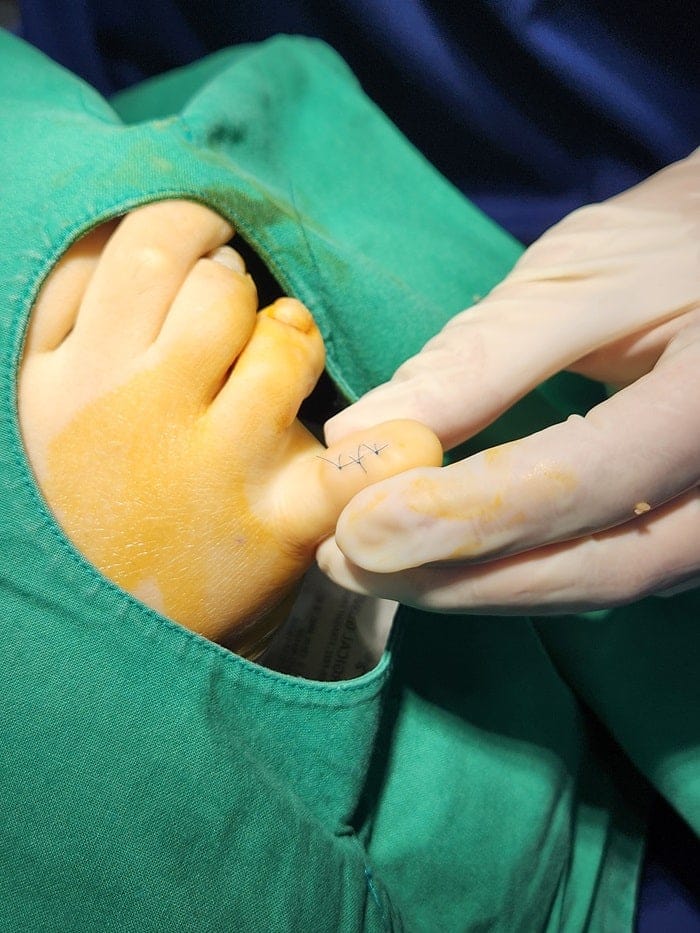
Post-operative suturing after little-toe corn removal surgery. At Gangnam Standard Orthopedics, our specialist clinic for toe corn removal, the suturing following surgery is also performed neatly.
Because our chief surgeon — with extensive surgical experience — personally performs the procedure from anesthesia through to closure, the suturing is clean and precise. Neat suturing is important because it minimizes postoperative bleeding, wound complications, and scarring after corn removal surgery. For toe corn removal surgery, please visit Gangnam Standard Orthopedics, conveniently located near Gangnam Station.
The clinic is a 4-minute walk from Gangnam Station Exit 5. From Exit 5, walk 275 m toward the Useong Apartment intersection, then cross the crosswalk once in the direction of Paris Baguette Gangnam Station Seocho Branch. Immediately to your right, pass Son Sang-won Climbing Gym and you will find us on the 2nd floor, above Nuaju Gangnam Station Café and Cheongdam Witch Gimbap Gangnam Station Branch. ※ Gangnam Standard Orthopedics is an officially registered clinic authorized to treat international patients.


