Plantar Corns, Calluses & Warts: Why an Accurate Diagnosis Is Essential for Foot and Back Pain
Plantar corns, calluses, and warts can cause foot and low back pain. Learn how Gangnam Standard Orthopedics diagnoses and surgically treats them with ultrasound and local anesthesia.

Plantar corns, calluses, and warts can cause significant foot pain and low back pain, which is why an accurate clinical evaluation is essential.
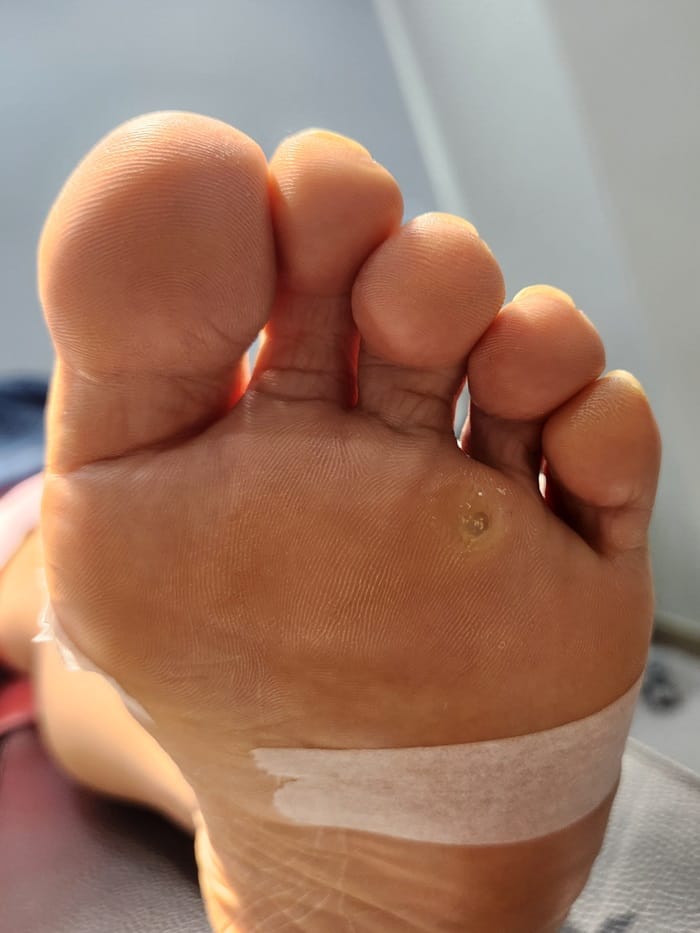
A patient who visited our clinic for plantar corns and calluses
This patient had been experiencing severe foot pain due to plantar corns and calluses, and had received laser treatment at another clinic for four months — with no pain relief whatsoever.
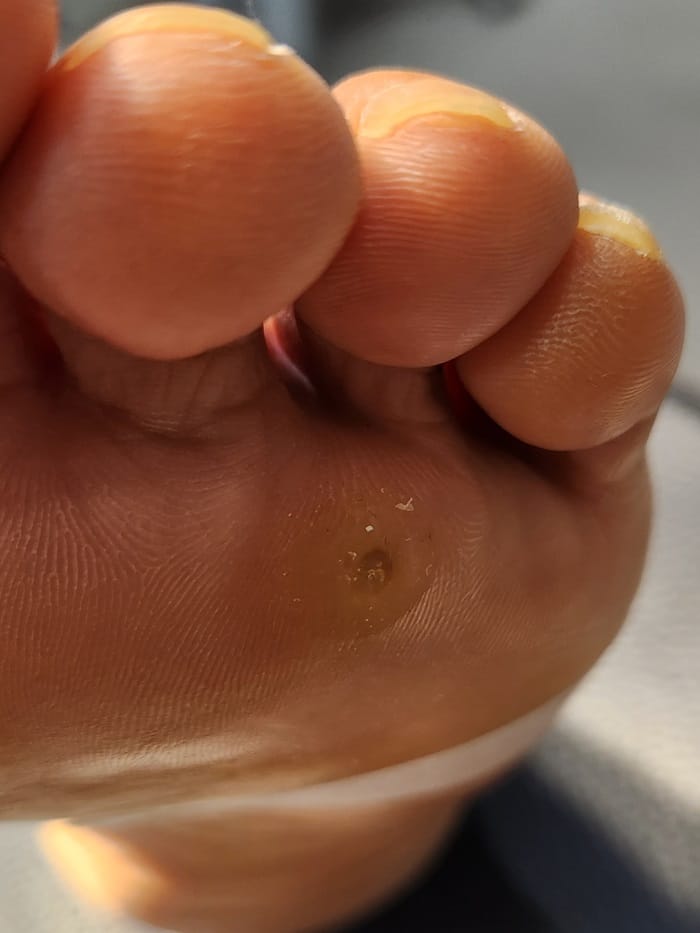
Failed laser treatment for plantar corns and calluses
Because the lesion was on the sole of the foot, the patient found walking extremely uncomfortable and even attempted to remove it themselves, but gave up due to the pain. Plantar corns and calluses cause difficulty with walking — not merely a cosmetic concern — which makes an accurate diagnosis absolutely necessary.
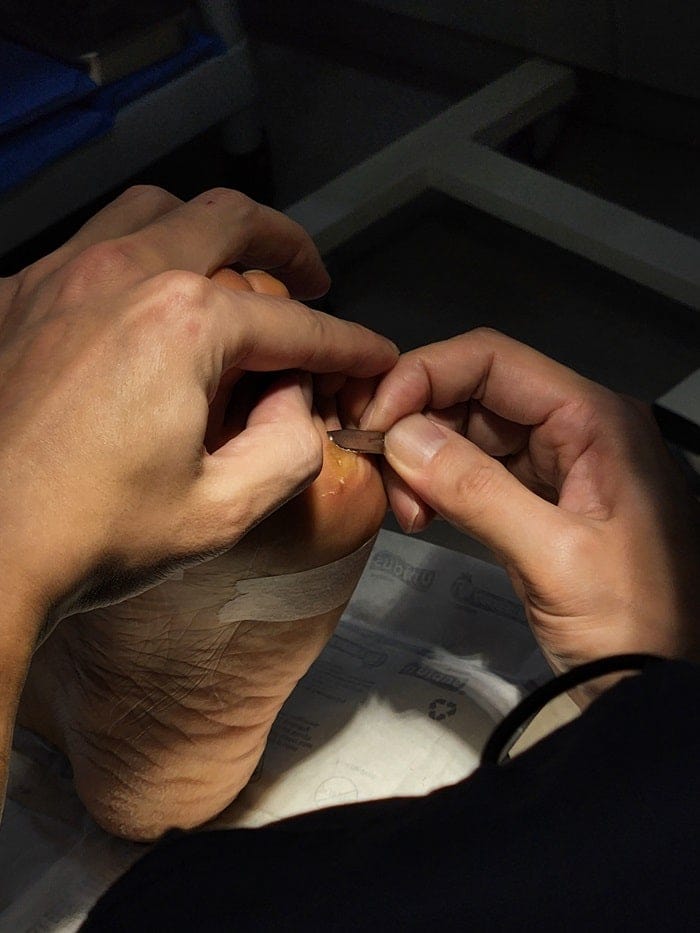
Some clinics diagnose plantar corns, calluses, or warts based on appearance alone, which is not the correct approach and carries a high risk of misdiagnosis. A thorough evaluation at a clinic specializing in plantar corns, calluses, and warts is essential for an accurate diagnosis.
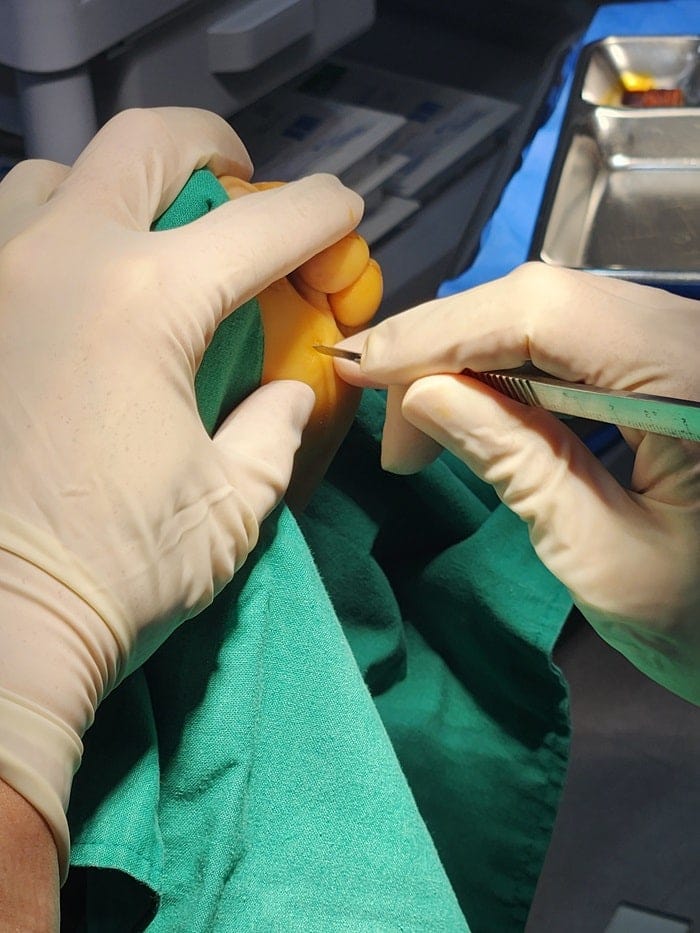
Plantar calluses and corns typically develop in predictable locations, but this patient presented with an unusually located lesion on the forefoot — a less common site.
Due to severe forefoot pain from the corn and callus, the patient was unconsciously shifting weight away from the front of the foot while walking. This altered gait pattern had progressed to the point of causing low back pain as well.
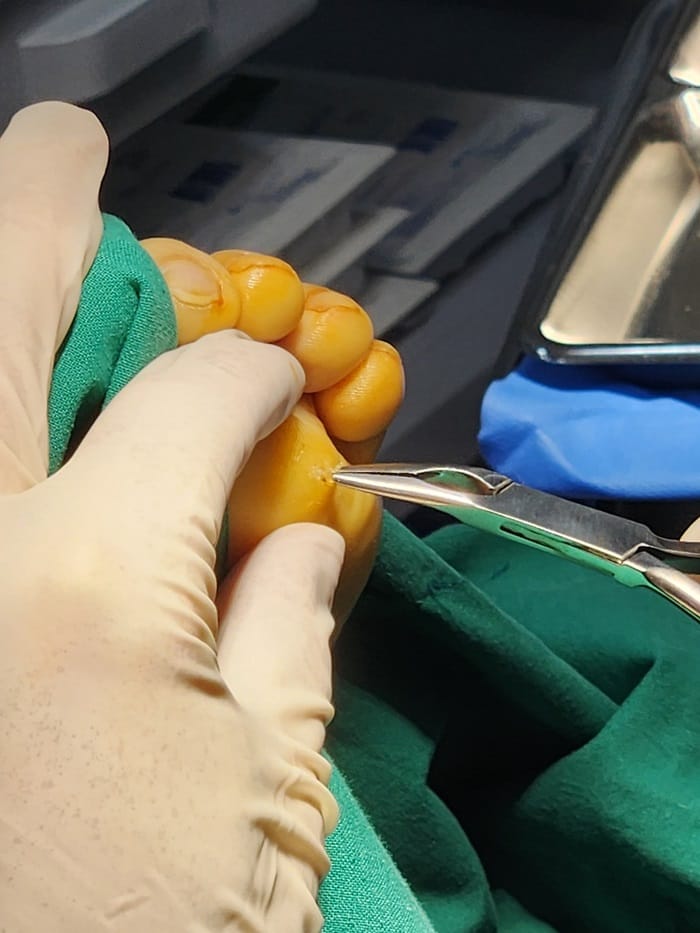
Dr. Cho Ju-won, foot and ankle specialist and chief physician at Gangnam Standard Orthopedics, addresses not only the plantar pain but also the associated low back pain commonly seen in patients with plantar corns, calluses, and warts — relieving the discomfort that has made walking painful.
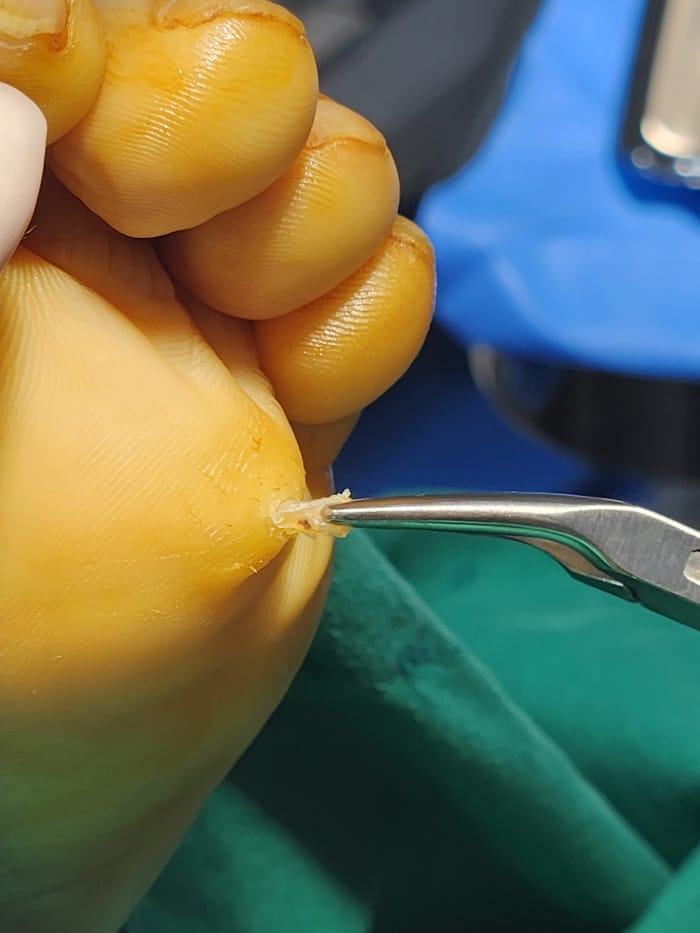
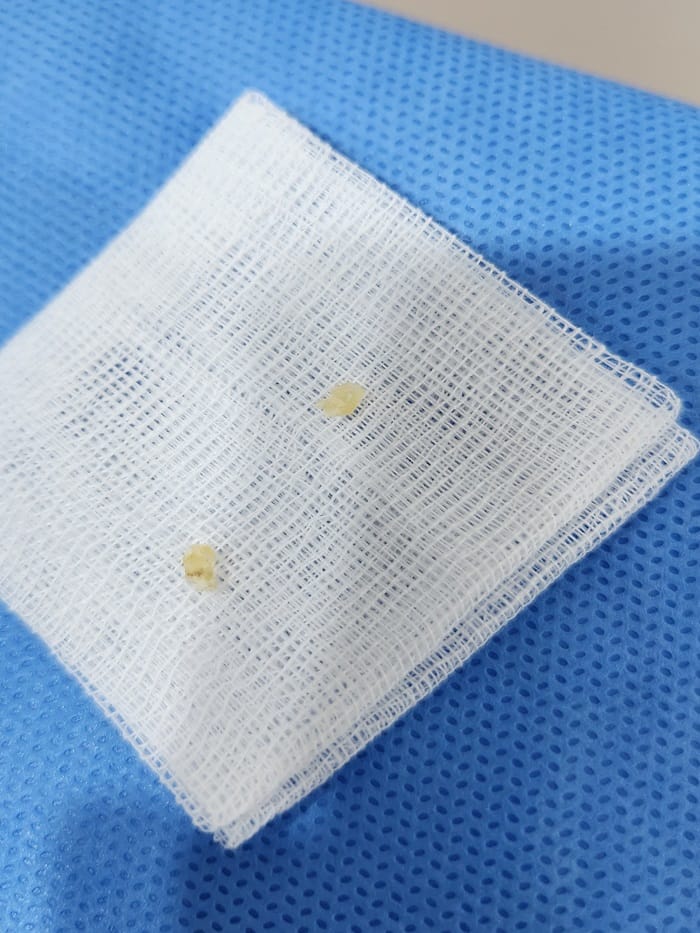
Removal of the root of a plantar corn and callus
At our clinic specializing in plantar corns, calluses, and warts, we use ultrasound imaging to confirm the absence of blood vessels surrounding the corn and to accurately verify the depth and apex of the lesion before proceeding with surgical removal of the plantar corn or callus.
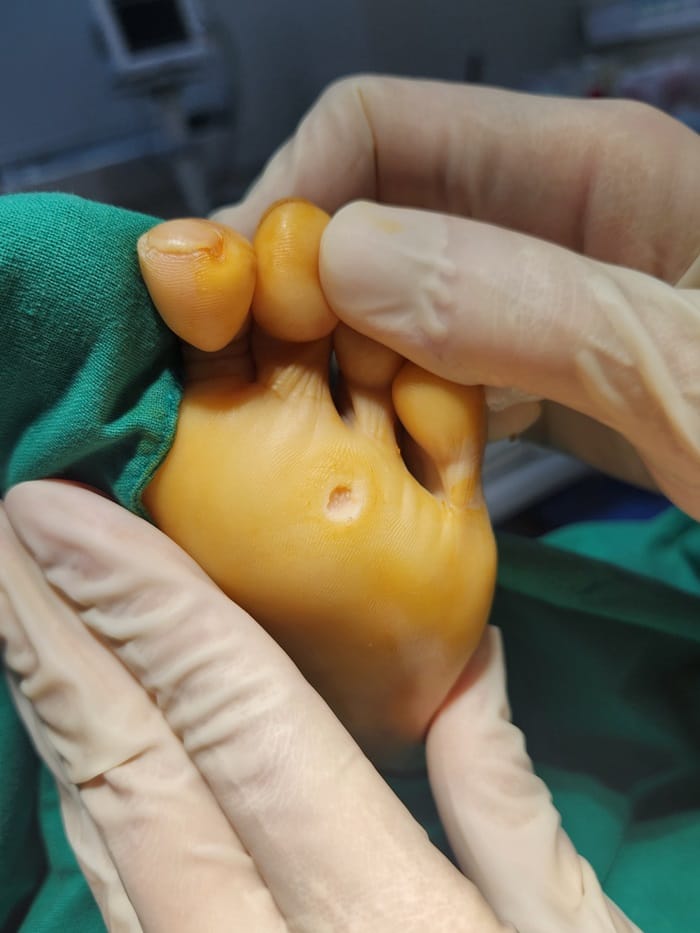
The procedure is performed under minimal-pain local anesthesia administered on the dorsum of the foot, rather than general or sedation anesthesia. This helps reduce both the cost and the time required for corn removal surgery.
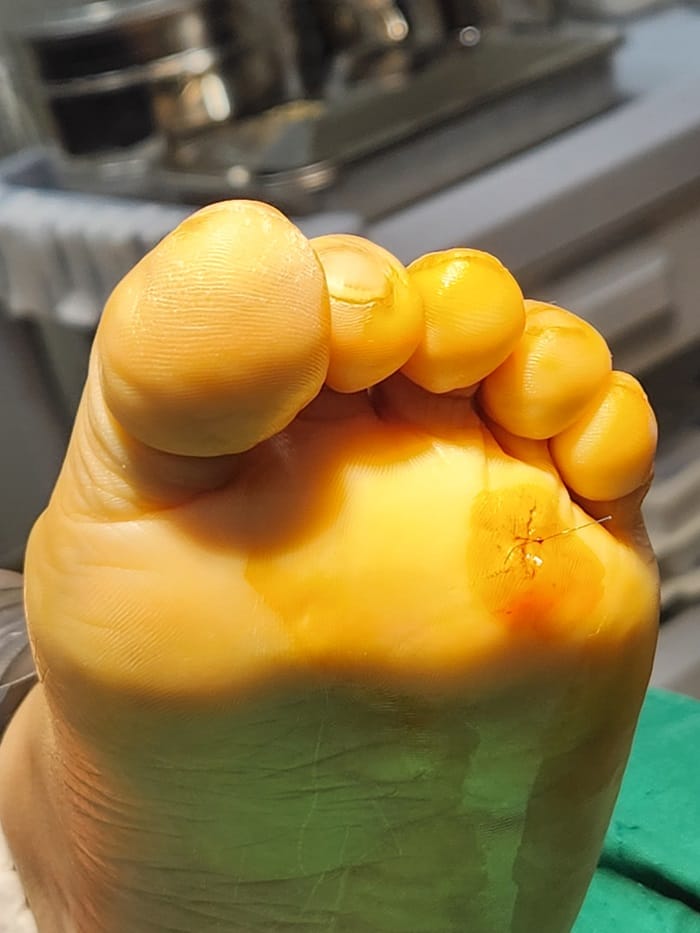
Because plantar corn and callus removal surgery addresses a functional issue — not a cosmetic one — it is eligible for national health insurance coverage.
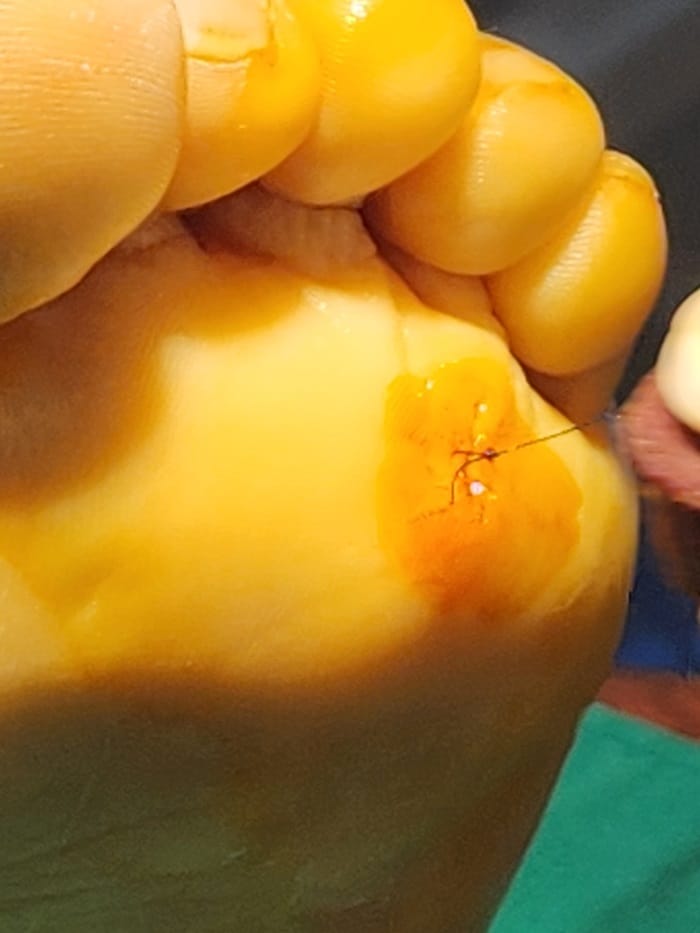
To prevent recurrence after plantar corn and callus removal, curettage of the corn root is performed, followed by a suture for hemostasis.
Sutures are typically removed approximately one week later. No protective brace is required; simple wound dressing at home is sufficient. With this procedure, both the removal of the plantar corn and callus and the prevention of recurrence are complete.
Plantar corns, calluses, and warts can cause lumbar sprains and muscle tension, leading to pain that extends from the sole of the foot all the way to the lower back. Please visit Gangnam Standard Orthopedics, a foot specialist clinic with a dedicated foot and ankle specialist, for an accurate evaluation and treatment.
Directions to Gangnam Standard Orthopedics, foot specialist clinic